Syn-Ake (Dipeptide Diaminobutyroyl Benzylamide Diacetate)
Snake-venom-mimetic cosmetic peptide with no independent published trial.
For research purposes only. These products are not intended to diagnose, treat, cure, or prevent any disease. By purchasing, you confirm these products will be used for legitimate research purposes.
About Syn-Ake (Dipeptide Diaminobutyroyl Benzylamide Diacetate)
Syn-Ake is a synthetic dipeptide designed to mimic Waglerin-1, a neurotoxin from temple viper venom that antagonises the nicotinic acetylcholine receptor at the neuromuscular junction. The intended cosmetic effect follows from that mechanism: less acetylcholine signalling means less muscle contraction and softer expression lines. It is a patented ingredient, originally from Pentapharm and now marketed by DSM-Firmenich. The reason its evidence tier is the lowest in this batch is straightforward — a literature search on 2026-08-04 returned no independent peer-reviewed trial. The efficacy claims trace back to the manufacturer's own published testing and to reseller material that repeats it. That does not make the compound ineffective, but it does mean nobody outside the supply chain has verified the claims, which is a materially different situation from Matrixyl's independent placebo-controlled trial. At around 496 Da it is small enough that penetration is less of an obstacle than for Argireline.
Key Benefits
- Small enough (~496 Da) that skin penetration is less limiting than for larger peptides
- Defined mechanism — nicotinic acetylcholine receptor antagonism
- Does not require injection
Set a goal (top of the page) to see how Syn-Ake (Dipeptide Diaminobutyroyl Benzylamide Diacetate) scores against it, and what the better-evidenced alternatives are.
Category Ratings
How to Take
Common Side Effects
- Poorly characterised — no independent published safety evaluation
- Contact irritation or sensitivity possible
- Not evaluated for injection
Legal & Regulatory Status
Sold as a cosmetic ingredient and as a research chemical; not a drug and not FDA-approved. No independent peer-reviewed efficacy or safety trial was located.
Safety and regulatory details for FDA-approved compounds are drawn from the official product label via openFDA; clinical development status reflects ClinicalTrials.gov. This information is provided for research reference, is not endorsed by the FDA, and may not be complete or current.
Research & Sources
Sources are selected for reliability (peer-reviewed literature, openFDA, ClinicalTrials.gov) but this is a research summary, not medical advice, and may not be exhaustive.
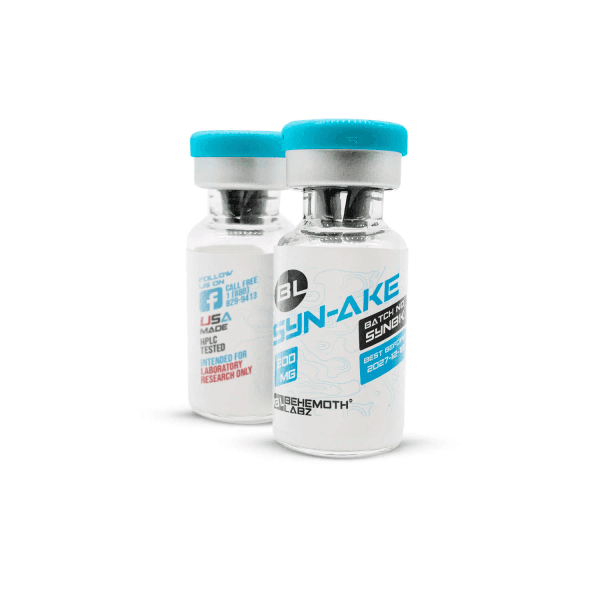
Prices at quality-checked sources · as of August 2026 (10 days ago)
- 200mg $228.96
Observed on each vendor’s public listing — see how these sources are vetted. Peptide Concierge doesn’t sell peptides and isn’t affiliated with any vendor; confirm current pricing at the source.
Builds a working set shared across the stack builder, calculator, scheduler and compare.