Retinalamin
Retinal tissue extract used ophthalmically in Russia — an undefined mixture, not a single peptide.
For research purposes only. These products are not intended to diagnose, treat, cure, or prevent any disease. By purchasing, you confirm these products will be used for legitimate research purposes.
About Retinalamin
Retinalamin is not a peptide in the sense that most of this catalog is. It is a complex of low-molecular-weight polypeptide fractions extracted from retinal tissue, used in Russia for retinal conditions such as dystrophy and diabetic retinopathy, and administered ophthalmically or by injection around the eye in that setting. Its closest analogue here is Cerebrolysin, another tissue-derived polypeptide mixture rather than a defined molecule. Two things follow from it being a mixture. First, a literature search on 2026-08-04 found no indexed peer-reviewed evidence for Retinalamin, so its use rests on national registration and clinical practice rather than published trials accessible internationally. Second, and practically: a stated purity percentage means something quite different for an undefined multi-component extract than for a synthetic single peptide. HPLC purity assumes there is one intended compound to measure against, and mass-spec identity confirmation — the check that distinguishes a real COA from a weak one — cannot verify a mixture whose composition is not specified. Certificates for products like this deserve more scepticism, not less.
Key Benefits
- Used clinically in Russia for retinal degenerative conditions
- Long history of national clinical practice
- Tissue-derived polypeptide fractions rather than a single synthetic molecule
Set a goal (top of the page) to see how Retinalamin scores against it, and what the better-evidenced alternatives are.
Category Ratings
How to Take
Common Side Effects
- Not characterised in indexed literature
- Tissue-derived extracts carry allergenic and immunogenic potential that synthetic peptides do not
- Injection site reactions
Legal & Regulatory Status
Not FDA-approved. Used ophthalmically in Russia under national registration. No indexed peer-reviewed evidence was located; research use only elsewhere.
Safety and regulatory details for FDA-approved compounds are drawn from the official product label via openFDA; clinical development status reflects ClinicalTrials.gov. This information is provided for research reference, is not endorsed by the FDA, and may not be complete or current.
Research & Sources
No citations available. We could not locate indexed peer-reviewed literature for this compound specifically. That absence is the reason for its evidence rating — treat any claims about it, including ours, with corresponding caution.
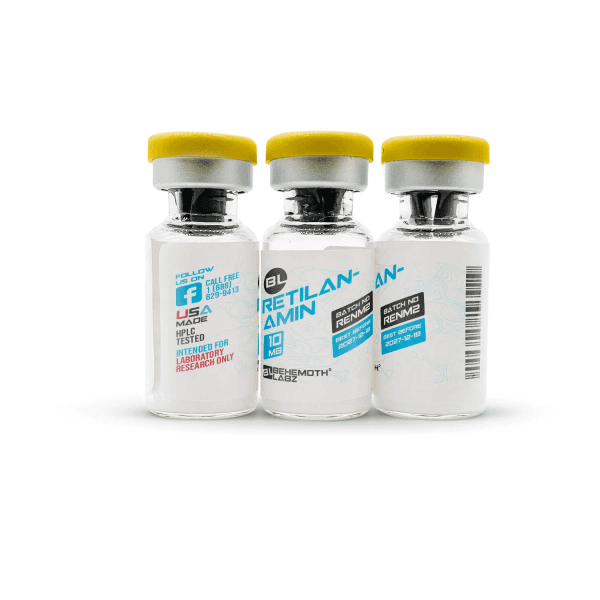
Prices at quality-checked sources · as of August 2026 (10 days ago)
- 10mg $45.48
Observed on each vendor’s public listing — see how these sources are vetted. Peptide Concierge doesn’t sell peptides and isn’t affiliated with any vendor; confirm current pricing at the source.
Builds a working set shared across the stack builder, calculator, scheduler and compare.