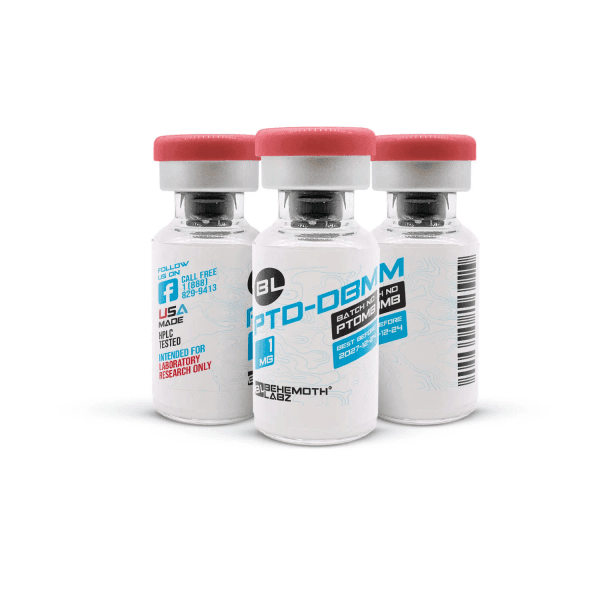
PTD-DBM
Wnt-activating peptide for hair regrowth — topical in every published study.
For research purposes only. These products are not intended to diagnose, treat, cure, or prevent any disease. By purchasing, you confirm these products will be used for legitimate research purposes.
About PTD-DBM
PTD-DBM is a peptide built to block a specific protein-protein interaction: it competes with CXXC5 for binding to Dishevelled, and since CXXC5 is a negative regulator of Wnt/β-catenin signalling, displacing it switches that pathway back on. The rationale is well grounded — CXXC5 levels are elevated in people with alopecia and rise in late anagen to trigger the catagen phase, and CXXC5 knockout mice show increased hair regrowth. Applying PTD-DBM reproduced that knockout-like effect, stimulating hair regrowth and wound-induced hair neogenesis in mice, and co-treatment with valproic acid (a GSK3β inhibitor that also activates Wnt) worked synergistically. Two practical notes. The published work applied it topically to skin — the PTD in its name is a protein transduction domain included specifically to get it through cell membranes — yet it is sold as a reconstitutable vial with no topical instructions given. And all of it is mouse work; no human trial has been run.
Key Benefits
- Stimulated hair regrowth and wound-induced hair neogenesis in mice
- Targets CXXC5, which is elevated in alopecia patients
- Reproduced the phenotype of CXXC5 knockout mice
- Synergised with valproic acid in accelerating wound healing
Set a goal (top of the page) to see how PTD-DBM scores against it, and what the better-evidenced alternatives are.
Category Ratings
How to Take
Common Side Effects
- Unknown — no human safety data exists
- Wnt/β-catenin is a proliferative pathway, so sustained systemic activation carries theoretical risk
- Contact irritation possible with topical use
Legal & Regulatory Status
Research use only. Not FDA-approved and never tested in humans. All data comes from mouse models using topical application.
Safety and regulatory details for FDA-approved compounds are drawn from the official product label via openFDA; clinical development status reflects ClinicalTrials.gov. This information is provided for research reference, is not endorsed by the FDA, and may not be complete or current.
Research & Sources
- Targeting of CXXC5 by a competing peptide stimulates hair regrowth and wound-induced hair neogenesis (PMID 28595998)
- The Dishevelled-binding protein CXXC5 negatively regulates cutaneous wound healing (PMID 26056233)
- CXXC5 mediates DHT-induced androgenetic alopecia via PGD2 (PMC9954685)
- The negative regulator CXXC5: making WNT look a little less Dishevelled — review (PMC6399733)
Sources are selected for reliability (peer-reviewed literature, openFDA, ClinicalTrials.gov) but this is a research summary, not medical advice, and may not be exhaustive.
Prices at quality-checked sources · as of August 2026 (10 days ago)
- 1mg $57.98
Observed on each vendor’s public listing — see how these sources are vetted. Peptide Concierge doesn’t sell peptides and isn’t affiliated with any vendor; confirm current pricing at the source.
Builds a working set shared across the stack builder, calculator, scheduler and compare.