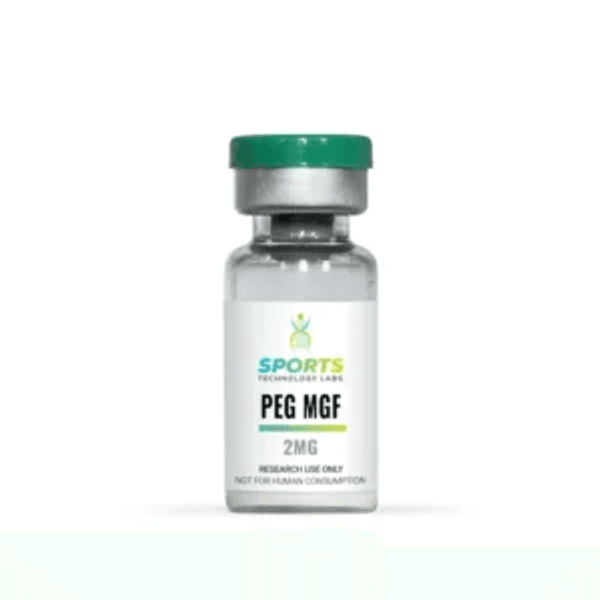
PEG-MGF
Pegylated MGF, modified for a longer half-life — with no published studies of its own.
For research purposes only. These products are not intended to diagnose, treat, cure, or prevent any disease. By purchasing, you confirm these products will be used for legitimate research purposes.
About PEG-MGF
PEG-MGF is Mechano Growth Factor with a polyethylene glycol chain attached to slow clearance, since native MGF disappears from circulation within minutes. The chemical rationale is sound and pegylation is a well-established pharmaceutical technique. What does not exist is evidence: there are no published human or animal studies on this pegylated form specifically. Everything claimed for it is extrapolated from MGF, which itself has only animal administration data and human expression data. The pegylation also converts a peptide designed for brief local signalling into a systemic one, which is a meaningful change in behaviour rather than simply a longer-lasting version of the same thing.
Key Benefits
- Longer circulating half-life than native MGF
- Fewer injections needed than the unmodified peptide
- Pegylation is a well-established half-life extension method
Set a goal (top of the page) to see how PEG-MGF scores against it, and what the better-evidenced alternatives are.
Category Ratings
How to Take
Common Side Effects
- Injection site irritation
- Unknown — no published safety data exists for the pegylated form
- Theoretical risk of unregulated tissue growth with prolonged use
Legal & Regulatory Status
Research use only. Not FDA-approved. No published studies exist on the pegylated form specifically; claims are extrapolated from MGF.
Safety and regulatory details for FDA-approved compounds are drawn from the official product label via openFDA; clinical development status reflects ClinicalTrials.gov. This information is provided for research reference, is not endorsed by the FDA, and may not be complete or current.
Research & Sources
- Mechano-Growth Factor: an important cog or a loose screw in the repair machinery? — parent compound review (PMC3485521)
- IGF-I splice variant expression in human muscle after resistance exercise — parent compound (PMC2342624)
Sources are selected for reliability (peer-reviewed literature, openFDA, ClinicalTrials.gov) but this is a research summary, not medical advice, and may not be exhaustive.
Prices at quality-checked sources · as of August 2026 (10 days ago)
- 2mg $46.99
Observed on each vendor’s public listing — see how these sources are vetted. Peptide Concierge doesn’t sell peptides and isn’t affiliated with any vendor; confirm current pricing at the source.
Builds a working set shared across the stack builder, calculator, scheduler and compare.