Orexin B (Hypocretin-2)
The less-studied orexin — also wake-promoting, with no human data.
For research purposes only. These products are not intended to diagnose, treat, cure, or prevent any disease. By purchasing, you confirm these products will be used for legitimate research purposes.
About Orexin B (Hypocretin-2)
Orexin B is the second product of the prepro-orexin gene, a 28-amino-acid peptide that signals mainly through OX2R. It shares orexin A's wake-promoting direction but has been studied far less, and unlike orexin A it has no published human administration data. It is also less stable in circulation and more OX2R-selective, which is interesting because OX2R-selective agonism has become the favoured pharmaceutical approach — work in mouse narcolepsy models showed OX2R-selective agonism was sufficient to improve cataplexy and sleep-wake fragmentation, and the compounds being developed on that basis are orally available small molecules such as TAK-861 rather than peptides. That direction of travel is worth knowing: the pharmaceutical industry pursued the receptor, not the peptide.
Key Benefits
- OX2R-selective, the receptor pharmaceutical development has focused on
- Wake-promoting in animal models
- The endogenous OX2R ligand
Set a goal (top of the page) to see how Orexin B (Hypocretin-2) scores against it, and what the better-evidenced alternatives are.
Category Ratings
How to Take
Common Side Effects
- Wakefulness and sleep disruption — the expected pharmacology
- Unknown — no human administration data exists
- Cardiovascular effects seen with orexin signalling generally
Legal & Regulatory Status
Research use only. Not FDA-approved and never administered to humans in a published study. Orexin-receptor agonist development has focused on oral small molecules rather than the peptide.
Safety and regulatory details for FDA-approved compounds are drawn from the official product label via openFDA; clinical development status reflects ClinicalTrials.gov. This information is provided for research reference, is not endorsed by the FDA, and may not be complete or current.
Research & Sources
- OX2R-selective orexin agonism ameliorates cataplexy and sleep/wake fragmentation in mouse narcolepsy (PMC9307173)
- TAK-861, an oral OX2R-selective agonist — produces wakefulness in monkeys (PMC11379823)
Sources are selected for reliability (peer-reviewed literature, openFDA, ClinicalTrials.gov) but this is a research summary, not medical advice, and may not be exhaustive.
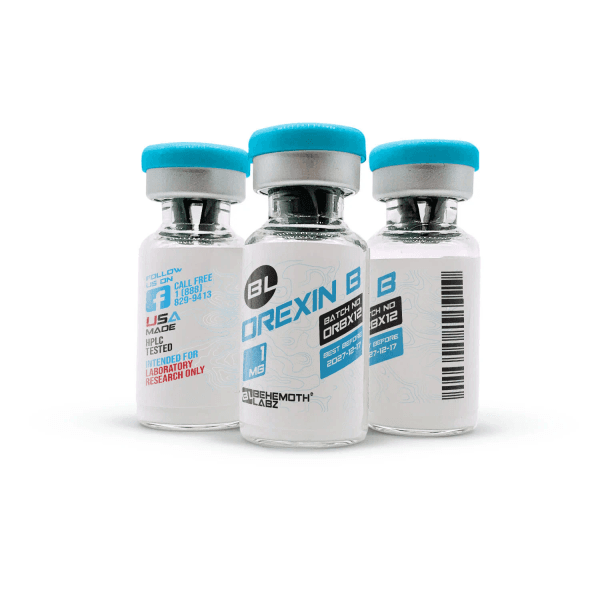
Prices at quality-checked sources · as of August 2026 (10 days ago)
- 1mg $159.475mg $261.96
Observed on each vendor’s public listing — see how these sources are vetted. Peptide Concierge doesn’t sell peptides and isn’t affiliated with any vendor; confirm current pricing at the source.
Builds a working set shared across the stack builder, calculator, scheduler and compare.