Orexin A (Hypocretin-1)
Wake-promoting neuropeptide — the opposite of a sleep aid.
For research purposes only. These products are not intended to diagnose, treat, cure, or prevent any disease. By purchasing, you confirm these products will be used for legitimate research purposes.
About Orexin A (Hypocretin-1)
Orexin A is a 33-amino-acid neuropeptide that drives arousal and wakefulness through the OX1R and OX2R receptors. Narcolepsy with cataplexy is caused by the loss of orexin-producing neurons, which is why replacing orexin is of clinical interest — and why it is worth being explicit that this compound promotes wakefulness and suppresses REM sleep. It is not a sleep aid, and taking it expecting sedation would produce the opposite result. It has real human data, which is unusual in this group. Double-blind, placebo-controlled studies gave 435 nmol of intranasal orexin A to patients with narcolepsy with cataplexy, finding reduced REM sleep duration and significantly fewer direct wake-to-REM transitions. In sleep-deprived nonhuman primates, systemic and nasal orexin A reduced the cognitive performance decrement from sleep loss. Note the route in every one of those studies: intranasal delivery was chosen because it reaches the central nervous system directly. A 33-residue peptide injected subcutaneously is not expected to cross the blood-brain barrier meaningfully, so the injectable presentation sold as a research vial is not the form the human evidence was generated with.
Key Benefits
- Genuine human trial data in narcolepsy with cataplexy
- Reduced sleep-deprivation cognitive decrement in nonhuman primates
- Suppresses REM sleep and stabilises wake-to-REM transitions
- The endogenous ligand rather than a synthetic analogue
Set a goal (top of the page) to see how Orexin A (Hypocretin-1) scores against it, and what the better-evidenced alternatives are.
Category Ratings
How to Take
Common Side Effects
- Wakefulness and difficulty sleeping — the intended pharmacology, not a side effect to work around
- REM sleep suppression
- Increased heart rate and blood pressure
- Nasal irritation with intranasal use
- Anxiety or agitation
Legal & Regulatory Status
Research use only. Not FDA-approved. Human studies were investigator-led intranasal trials in diagnosed narcolepsy; orexin-receptor agonism is an active area of pharmaceutical development but no orexin peptide product is approved.
Safety and regulatory details for FDA-approved compounds are drawn from the official product label via openFDA; clinical development status reflects ClinicalTrials.gov. This information is provided for research reference, is not endorsed by the FDA, and may not be complete or current.
Research & Sources
- Effects of intranasal hypocretin-1 (orexin A) on sleep in narcolepsy with cataplexy — placebo-controlled (PMID 22036605)
- Intranasal orexin-A on sleep, wakefulness and attention in narcolepsy with cataplexy — crossover trial (PMID 24406723)
- Intranasal orexin-A: neuronal activation, neurochemistry and attention in aged rats (PMC6987046)
- Localized loss of hypocretin (orexin) cells in narcolepsy — the deficiency this compound addresses (PMC2717206)
Sources are selected for reliability (peer-reviewed literature, openFDA, ClinicalTrials.gov) but this is a research summary, not medical advice, and may not be exhaustive.
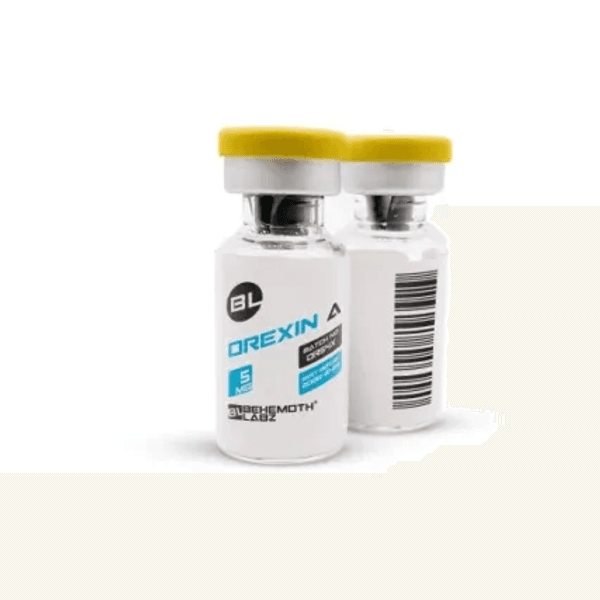
Prices at quality-checked sources · as of August 2026 (10 days ago)
- 5mg $96.63
Observed on each vendor’s public listing — see how these sources are vetted. Peptide Concierge doesn’t sell peptides and isn’t affiliated with any vendor; confirm current pricing at the source.
Builds a working set shared across the stack builder, calculator, scheduler and compare.