Leptin 22-56
Leptin fragment that suppressed feeding in rats — by injection into the brain.
For research purposes only. These products are not intended to diagnose, treat, cure, or prevent any disease. By purchasing, you confirm these products will be used for legitimate research purposes.
About Leptin 22-56
Leptin 22-56 is a 35-amino-acid fragment from the N-terminal region of leptin. Given directly into the lateral cerebral ventricle of non-obese male rats, it produced dose-related and reversible inhibition of food intake — a real finding, and notably it does not appear to act through the leptin receptor itself, so the mechanism is something other than simple leptin mimicry. It is also worth knowing which fragment does what: the leptin 116-130 fragment reproduces leptin's cognitive and neuroprotective effects on synaptic plasticity, and 22-56 specifically does not. The larger issue for anyone considering it for fat loss is leptin resistance. Common obesity is characterised by high circulating leptin and tolerance to it, and leptin therapy does not meaningfully change body weight, body composition, glucose, insulin sensitivity, or HbA1c in obese people with already-elevated leptin. That is why the one approved leptin drug, metreleptin, is indicated for the complications of leptin deficiency in generalised lipodystrophy and works dramatically in rare congenital leptin deficiency — not for ordinary obesity. Adding more leptin signal to a leptin-resistant system is working against the physiology, and the rat feeding data was generated by intracerebroventricular injection rather than a subcutaneous shot.
Key Benefits
- Dose-related, reversible inhibition of food intake in rats
- Acts through a mechanism other than the leptin receptor
- Short, readily synthesised fragment of a 167-residue protein
Set a goal (top of the page) to see how Leptin 22-56 scores against it, and what the better-evidenced alternatives are.
Category Ratings
How to Take
Common Side Effects
- Unknown — no human administration data exists
- Injection site reactions
- Leptin signalling interacts with the reproductive axis and immune function
Legal & Regulatory Status
Research use only. Not FDA-approved. The approved leptin analogue, metreleptin, is indicated for leptin deficiency in generalised lipodystrophy — not for common obesity, where exogenous leptin is ineffective.
Safety and regulatory details for FDA-approved compounds are drawn from the official product label via openFDA; clinical development status reflects ClinicalTrials.gov. This information is provided for research reference, is not endorsed by the FDA, and may not be complete or current.
Research & Sources
- A 35 amino acid fragment of leptin inhibits feeding in the rat — the primary 22-56 finding, ICV route (PMID 8895397)
- A leptin fragment mirrors the cognitive enhancing and neuroprotective actions of leptin — shows 116-130 does this, 22-56 does not (PMC6433184)
- Leptin applications in 2015: what have we learned about leptin and obesity? — leptin resistance in common obesity (PMID 26313897)
- Metreleptin for leptin deficiency in generalized lipodystrophy — the actual approved indication (PMC4931926)
Sources are selected for reliability (peer-reviewed literature, openFDA, ClinicalTrials.gov) but this is a research summary, not medical advice, and may not be exhaustive.
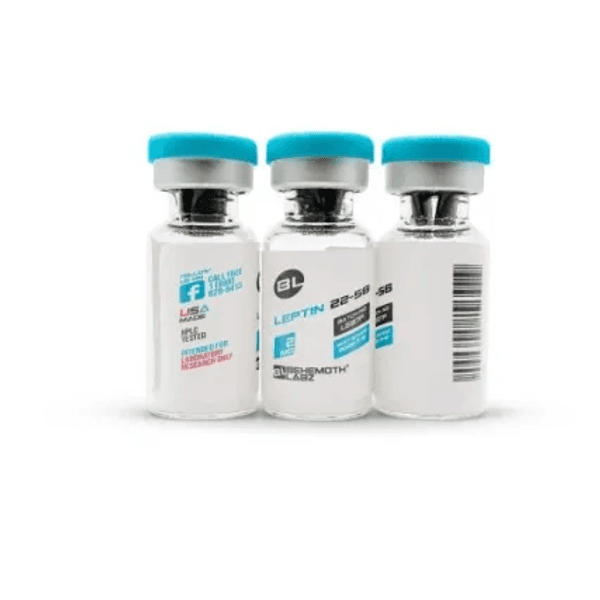
Prices at quality-checked sources · as of August 2026 (10 days ago)
- 2mg $133.25
Observed on each vendor’s public listing — see how these sources are vetted. Peptide Concierge doesn’t sell peptides and isn’t affiliated with any vendor; confirm current pricing at the source.
Builds a working set shared across the stack builder, calculator, scheduler and compare.