HEP-1 (Human Ezrin Peptide One)
Ezrin fragment registered as a drug in Russia, with real antiviral clinical data.
For research purposes only. These products are not intended to diagnose, treat, cure, or prevent any disease. By purchasing, you confirm these products will be used for legitimate research purposes.
About HEP-1 (Human Ezrin Peptide One)
HEP-1 is a 14-amino-acid synthetic fragment of the human ezrin protein, corresponding to residues 324–337. Unlike most compounds in this catalog it is a registered medicine — marketed in Russia as Gepon since 2001, approved there as an immunomodulator for topical and internal use against viral, bacterial and fungal infections. It works by suppressing IL-6 and other inflammatory cytokines while amplifying adaptive B-cell and T-cell responses, an unusual combination of anti-inflammatory and immune-amplifying activity. Its human evidence is modest in size but real. In HIV-infected patients with hepatitis C, 16 of 18 patients responded to HEP-1 with significant reductions in HCV viral load and normalisation of serum liver enzymes. A separate Moscow study found orally administered HEP-1 increased antibody titres in response to hepatitis-B vaccination. Ezrin peptides have been in clinical use in Russia for over two decades with a reported good safety record. None of this constitutes FDA approval, and the trials are small and largely single-country, so the evidence should be read as promising rather than settled.
Key Benefits
- A registered medicine in Russia (as Gepon) since 2001
- Reduced HCV viral load and normalised liver enzymes in 16 of 18 co-infected patients
- Increased antibody response to hepatitis-B vaccination in a clinical study
- Suppresses IL-6 while amplifying adaptive immunity
Set a goal (top of the page) to see how HEP-1 (Human Ezrin Peptide One) scores against it, and what the better-evidenced alternatives are.
Category Ratings
How to Take
Common Side Effects
- Reported good safety record over two decades of Russian clinical use
- Injection site reactions
- Immunomodulators can in principle affect autoimmune conditions
- Not characterised outside its country of registration
Legal & Regulatory Status
Not FDA-approved. Registered for human use in Russia since 2001 as Gepon, an immunomodulator for viral, bacterial and fungal infections. Research use only elsewhere.
Safety and regulatory details for FDA-approved compounds are drawn from the official product label via openFDA; clinical development status reflects ClinicalTrials.gov. This information is provided for research reference, is not endorsed by the FDA, and may not be complete or current.
Research & Sources
- Treatment of hepatitis C with human ezrin peptide one (HEP1) in HIV-infected patients (PMID 17803064)
- Ezrin peptide therapy from HIV to COVID — inhibition of inflammation, amplification of adaptive immunity (PMC8584018)
- Ezrin peptide therapy — review (PMID 34769119)
Sources are selected for reliability (peer-reviewed literature, openFDA, ClinicalTrials.gov) but this is a research summary, not medical advice, and may not be exhaustive.
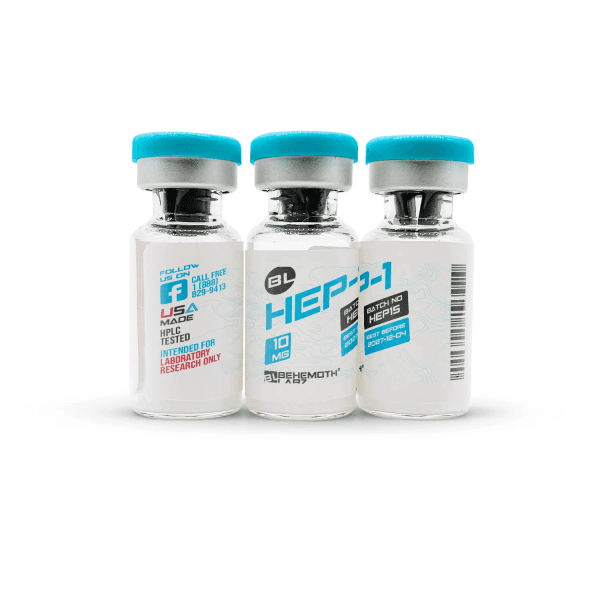
Prices at quality-checked sources · as of August 2026 (10 days ago)
- 10mg $91.47
Observed on each vendor’s public listing — see how these sources are vetted. Peptide Concierge doesn’t sell peptides and isn’t affiliated with any vendor; confirm current pricing at the source.
Builds a working set shared across the stack builder, calculator, scheduler and compare.