Ghrelin (Acylated)
The endogenous hunger hormone — only active if the octanoyl group is intact.
For research purposes only. These products are not intended to diagnose, treat, cure, or prevent any disease. By purchasing, you confirm these products will be used for legitimate research purposes.
About Ghrelin (Acylated)
Ghrelin is the natural 28-amino-acid hormone that every peptide in the GHRP family imitates. It is the reference compound for GHS-R1a signalling and has been given to humans in many infusion studies covering GH release, appetite, gastric motility, and energy balance. One technical detail dominates everything else about buying it: ghrelin only works if serine-3 carries an n-octanoyl group, attached in the body by the enzyme GOAT. Unacylated (des-acyl) ghrelin cannot activate GHS-R1a at all. Because a standard HPLC purity report measures how pure a sample is rather than whether that modification is present, an HPLC-only certificate cannot tell you if what you have is active — mass-spec identity confirmation is what distinguishes the two forms.
Key Benefits
- The endogenous reference ligand for the GHS-R1a receptor
- Extensive human infusion data across GH, appetite, and gastric motility
- Stimulates appetite and gastric emptying
- Useful comparator for evaluating synthetic GH secretagogues
Set a goal (top of the page) to see how Ghrelin (Acylated) scores against it, and what the better-evidenced alternatives are.
Category Ratings
How to Take
Common Side Effects
- Marked increase in hunger
- Transient rise in blood glucose
- Flushing and sweating
- Drowsiness
- Rise in cortisol and prolactin
Legal & Regulatory Status
Research use only. Not FDA-approved. Human studies were conducted as supervised clinical infusions, not self-administered protocols.
Safety and regulatory details for FDA-approved compounds are drawn from the official product label via openFDA; clinical development status reflects ClinicalTrials.gov. This information is provided for research reference, is not endorsed by the FDA, and may not be complete or current.
Research & Sources
- Ghrelin octanoylation by GOAT — why acylation is required for activity (PMC8316800)
- How the ghrelin receptor recognizes the acyl-modified hormone (PMC12009760)
- Ghrelin octanoylation by GOAT — protein biochemistry review (PMID 30626708)
- Recent advances in potential clinical application of ghrelin in obesity (PMC3317165)
Sources are selected for reliability (peer-reviewed literature, openFDA, ClinicalTrials.gov) but this is a research summary, not medical advice, and may not be exhaustive.
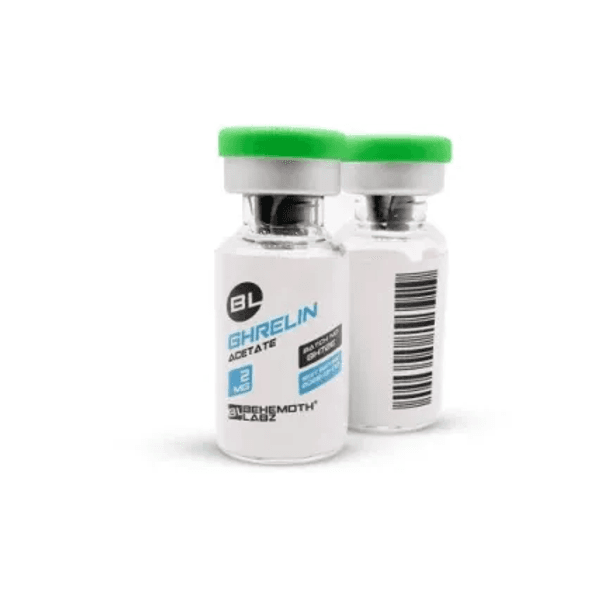
Prices at quality-checked sources · as of August 2026 (10 days ago)
- 2mg $80.26
Observed on each vendor’s public listing — see how these sources are vetted. Peptide Concierge doesn’t sell peptides and isn’t affiliated with any vendor; confirm current pricing at the source.
Builds a working set shared across the stack builder, calculator, scheduler and compare.