B7-33
Single-chain relaxin mimetic that reversed organ fibrosis in rodents.
For research purposes only. These products are not intended to diagnose, treat, cure, or prevent any disease. By purchasing, you confirm these products will be used for legitimate research purposes.
About B7-33
B7-33 is a single-chain peptide derived from the B-chain of human relaxin-2, engineered as a functionally selective — biased — agonist of the relaxin receptor RXFP1. It preferentially activates the pERK pathway over cAMP, and that selectivity is the point: it was designed to keep relaxin's antifibrotic activity while avoiding the proliferative signalling that made native relaxin a concern in cancer contexts. Studies confirmed it did not promote prostate cancer cell tumour growth. The rodent antifibrotic data is substantial. B7-33 reversed lung and heart fibrosis across three separate preclinical models, attenuated adverse cardiac remodelling after myocardial infarction in mice, and in an experimental cardiomyopathy model reduced left ventricular fibrosis more rapidly than perindopril, an established ACE inhibitor. One quirk worth knowing: it shows poor potency in HEK cells overexpressing RXFP1 but matches native relaxin in fibroblasts expressing the receptor natively — a reminder that its activity depends on receptor context. There are no human trials.
Key Benefits
- Reversed lung and heart fibrosis in three preclinical rodent models
- Outpaced perindopril at reducing left ventricular fibrosis in a cardiomyopathy model
- Biased agonism designed to avoid relaxin's proliferative signalling
- Did not promote prostate cancer cell tumour growth in testing
Set a goal (top of the page) to see how B7-33 scores against it, and what the better-evidenced alternatives are.
Category Ratings
How to Take
Common Side Effects
- Unknown — no human safety data exists
- Relaxin signalling affects vascular tone, so blood pressure effects are plausible
- Injection site reactions
Legal & Regulatory Status
Research use only. Not FDA-approved and never tested in humans. All efficacy data is from rodent fibrosis models.
Safety and regulatory details for FDA-approved compounds are drawn from the official product label via openFDA; clinical development status reflects ClinicalTrials.gov. This information is provided for research reference, is not endorsed by the FDA, and may not be complete or current.
Research & Sources
- B7-33 maintains relaxin's cardioprotective effects and reduces LV fibrosis faster than perindopril (PMID 36753958)
- B7-33, a functionally selective RXFP1 agonist, attenuates MI-related adverse cardiac remodeling in mice (PMID 32295457)
- Relaxin family peptides: structure-activity relationship studies (PMC5406294)
- Characterization of a potent long-lasting single chain RXFP1 agonist in cells and in vivo (PMC9705314)
Sources are selected for reliability (peer-reviewed literature, openFDA, ClinicalTrials.gov) but this is a research summary, not medical advice, and may not be exhaustive.
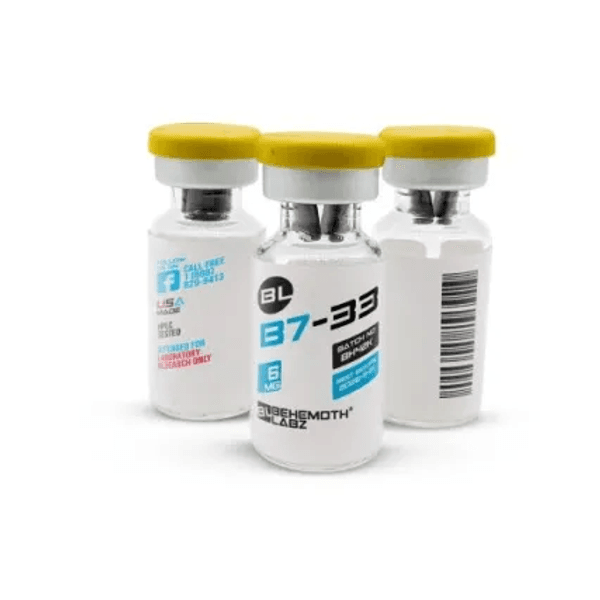
Prices at quality-checked sources · as of August 2026 (10 days ago)
- 6mg $79.7112mg $128.98
Observed on each vendor’s public listing — see how these sources are vetted. Peptide Concierge doesn’t sell peptides and isn’t affiliated with any vendor; confirm current pricing at the source.
Builds a working set shared across the stack builder, calculator, scheduler and compare.